

Beyond Nationality and Success: Two Daughters, Two Relationships to Power
During the 2026 Winter Olympics, many people were discussing Eileen Gu and Alysa Liu.
Some spoke about nationality.
Others about loyalty.
Still others about success.
Across both China and the United States, these conversations largely remained on the surface. The more interesting question may be something else:
Why do two people with such similar beginnings end up living such different lives?
And more importantly, is this divergence really a matter of choice, or is it shaped long before choice becomes visible?
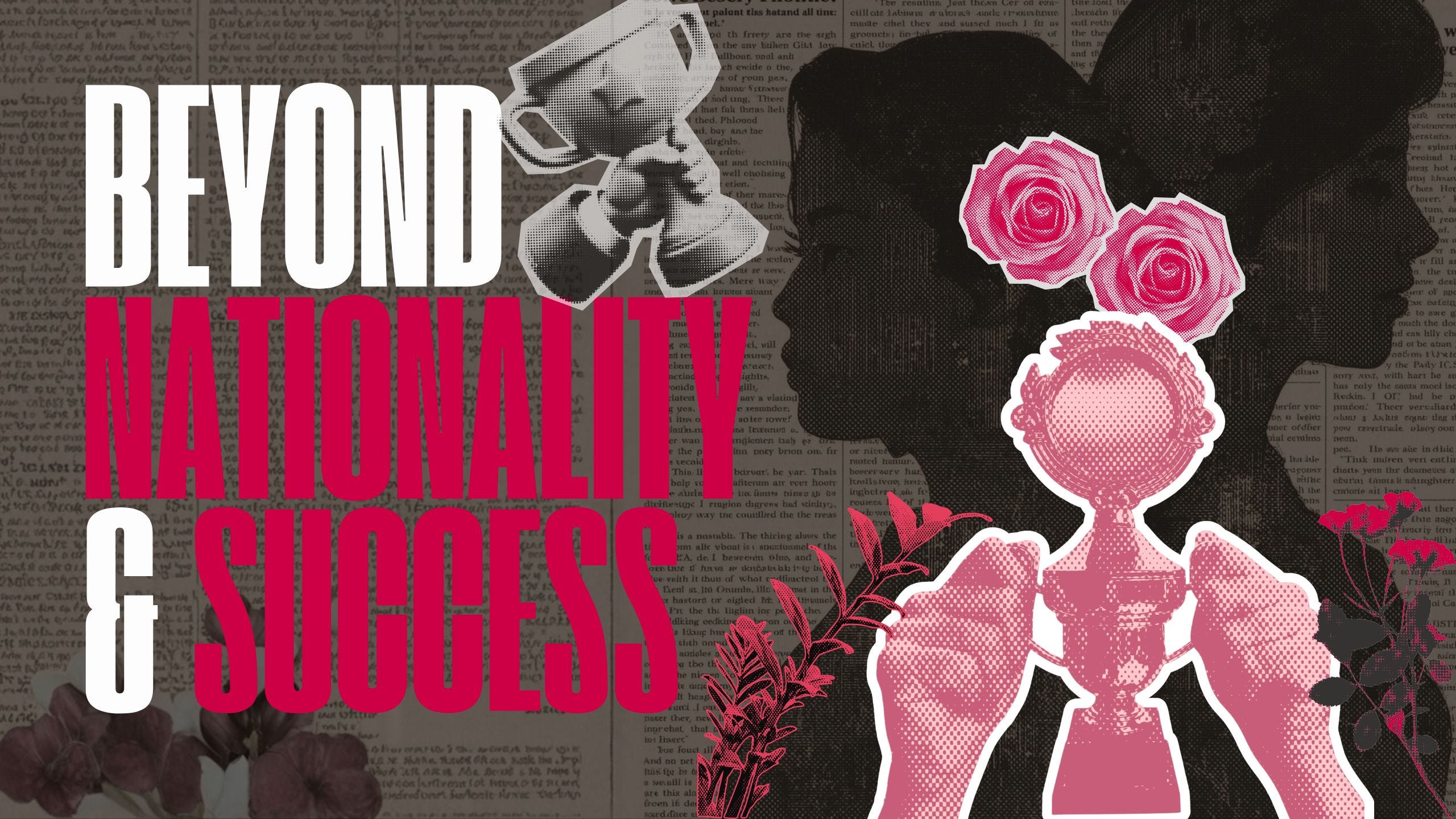
Eileen Gu, a freestyle skiing champion raised in California, chose to compete for China. She became one of the most visible athletes of her generation—winning Olympic medals, securing global endorsements, and moving fluently between languages, markets, and cultural identities.
Alysa Liu, a figure skating prodigy also raised in the United States, rose just as early. She became the youngest U.S. national champion in history, later contributing to a team Olympic gold.
And then, in 2022, she stepped away. Not because she had failed, but because she was exhausted by the demands of elite sport, by the loss of joy, by a life that had become too narrowly defined.
Two years later, she returned. Not as the same athlete, but on different terms—with greater control over her programs, her music, her pace, and the meaning of her participation. And in 2026, she completed one of the most striking arcs of this Olympic cycle.
From a distance, their stories appear parallel. Up close, they begin to diverge.
The contrast between them is often framed in familiar terms—nationality, loyalty, success. But athletes competing for countries other than the one in which they were born is hardly unusual. It has long been part of international sport, shaped by migration, training systems, and opportunity.
The intensity of the reaction, then, suggests that something else is being projected onto these two lives—something less about sport itself, and more about how we interpret choice. Because what feels different is not only what they chose but the conditions under which those choices became possible.
To understand that difference, it helps to look one generation earlier.
Both were raised by single Chinese immigrant parents.
Both parents carried with them the imprint of migration, discipline, and self-determination.
But the lives they built and the meanings they drew from those lives were not the same.
One learned how to move through systems—
to recognize opportunity, to enter institutions, to expand what was available.
The other learned, just as early, how to live with their limits—
how to question systems, how to keep a distance from what could not be taken for granted.
These are not simply different life stories. They are different ways of understanding the world. What separates these worldviews is not only ambition or restraint, but something more fundamental: their relationship to power.
In one, power is something to be read clearly and engaged with—
to move toward it, to work within it, to translate it into opportunity.
Its meaning lies less in what it represents than in what it makes possible.
In the other, power is approached with distance—
something to be questioned, and at times refused.
Not every opportunity is taken, because not every opportunity is neutral.
There are boundaries that are not meant to be crossed without cost.
These orientations are rarely taught explicitly. They are absorbed through experience, through memory, through the lives that precede us. And parenting, often without being consciously articulated, becomes the quiet transmission of those understandings.
As parents, we say we want success for our children. But success is never a neutral word.
Sometimes it means expansion—
a widening of horizons, a careful positioning within the structures that shape the world.
And sometimes it means preservation—
a commitment to autonomy, to integrity, to remaining intact even when greater rewards are within reach.
Neither is simple.
Neither is without cost.
Both daughters are, by any measure, extraordinary. But they did not arrive in the world as symbols. They became symbols because we needed them to be.
We read in them our own tensions:
between ambition and restraint,
between mobility and rootedness,
between the desire to be seen and the desire to remain whole.
And beneath it all, a quieter question lingers—
one that success stories rarely make space for:
How much of a life is chosen, and how much is shaped long before choice becomes visible?
In this sense, the reaction to Eileen Gu is particularly revealing.
The discomfort surrounding her is not simply about the flag she chose to represent.
Athletes have long navigated multiple identities, and such decisions are rarely reducible to loyalty alone. What unsettles people is something more structural: the perception that, in her case, questions around dual nationality—typically governed by strict boundaries—have appeared more flexible than they do for others.
A system that speaks in clear terms about rules and boundaries appears, at times, more accommodating when the individual involved is exceptional—globally marketable, symbolically useful, or strategically valuable. And the condition that makes such flexibility possible is the subtle suspension of a basic principle: the equal standing of individuals.
Whether or not this perception is entirely fair is, in a sense, secondary. What matters is that it exists. And once it exists, it reshapes how success is read. Admiration becomes more conditional. Recognition becomes entangled with suspicion. Not necessarily because the individual has changed, but because the framework through which the public interprets success has shifted.
Perhaps this is why the response feels so charged. Not because we are judging these two young women, but because we are recognizing something uncomfortably familiar.
A growing fatigue with systems that appear consistent in principle, but flexible in practice.
A skepticism toward success that seems too frictionless, too well-aligned with power.
And alongside it, a quieter, still-forming longing:
for lives that feel less constructed,
less negotiated,
less contingent on forces beyond the individual.
Not smaller.
Not less ambitious.
But more clearly one’s own.
And perhaps, at its core, this is a question of authorship—
not of bending without limit in the pursuit of success,
but of shaping, slowly and deliberately, a life that can be called one’s own—
even within imperfection and constraint.
Read the article in Chinese:
